
Cities often make more progress on accessibility when they connect responsibility, funding, resident participation, and reporting. This guide explains how cities can join a global accessibility movement through a public commitment, a baseline audit, disability-led participation, inclusive procurement, and public reporting.
The steps below separate joining the Global Compact from the longer work of implementing and reporting on accessibility.
What the Global Compact on Inclusive and Accessible Cities Means
The Cities For All initiative connects local and regional governments, city leaders, practitioners, civil-society organizations, and other partners around inclusive and accessible urban development. The relevant framework for cities is the Global Compact on Inclusive and Accessible Cities. For a Foundation-hosted overview, read the Global Compact on Inclusive and Accessible Cities. The Victor Pineda Foundation is listed as an institutional partner on the official Cities For All site.
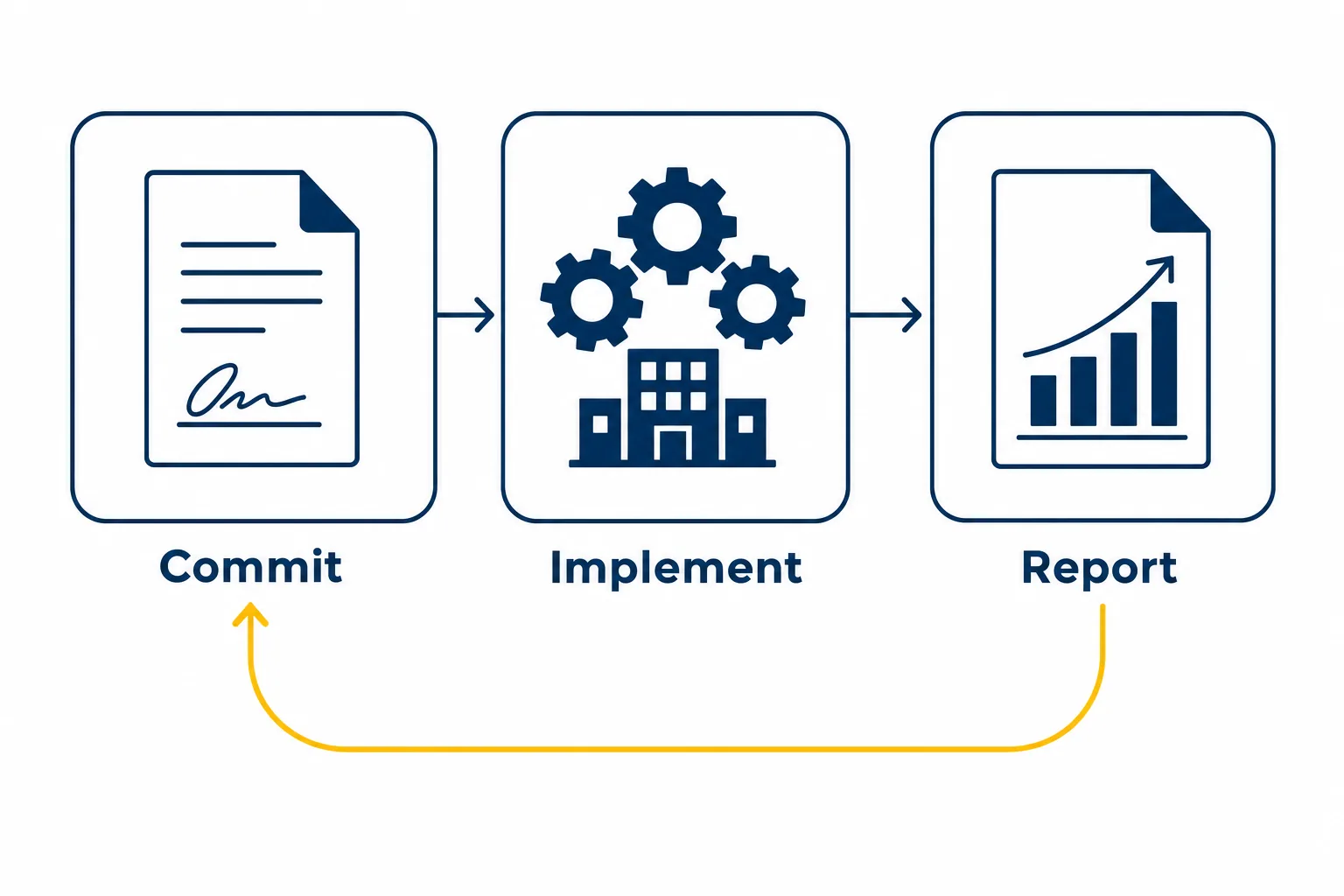
The Compact itself is organized around six principles. For this practical guide, city action can be understood in three editorial stages:
1. Commit. Publicly express interest and complete the current joining steps required by the campaign organizers. 2. Implement. Translate the principles into policies, budgets, procurement rules, projects, services, and participation processes. 3. Report. Publish progress, remaining barriers, and next actions on a consistent schedule.
Related readingCities For All Campaign | Victor Pineda FoundationRead the guide →A public commitment is most useful when it is followed by a baseline, an implementation plan, peer learning where available, and regular reporting.
This guide is written for mayors, city managers, planning directors, mobility leads, digital-services heads, and staff supporting a disability commission.
The Six Principles of the Global Compact, and What They Mean for a City
The official Global Compact principles are the foundation of the framework. Do not confuse them with the three practical stages used in this guide.
| Official principle | What it means for a city |
|---|---|
| Non-discrimination | Identify and address discrimination and barriers affecting persons with disabilities, older persons, and other people at risk of exclusion. |
| Accessibility | Improve access to the physical and digital environment, including buildings, roads, transportation, information, communications, public facilities, and emergency services. |
| Participation | Involve persons with disabilities and older persons in relevant urban-planning and decision-making stages. |
| Inclusive urban policies and programs | Embed accessibility and universal design in urban policies, programs, budgets, procurement, and accountable institutions, subject to local authority and law. |
| Capacity building | Strengthen the skills of city staff, practitioners, civil-society organizations, and other partners who contribute to inclusive governance. |
| Data for development | Collect reliable, relevant, and, where appropriate, disaggregated data to understand barriers, prioritize action, and monitor progress. |
The Compact also calls on signatories to report regularly on steps taken and progress made.
Step 1: Confirm the Current Joining Process and Appoint a City Focal Point
For many cities, signing may be a practical first step, but the current process and participation requirements should be confirmed with the campaign organizers. The published Cities For All campaign process describes expressing interest, formal registration, agreement to the principles, and learning about the Community of Practice. The Foundation’s Cities For All global network provides a related network and partnership pathway.
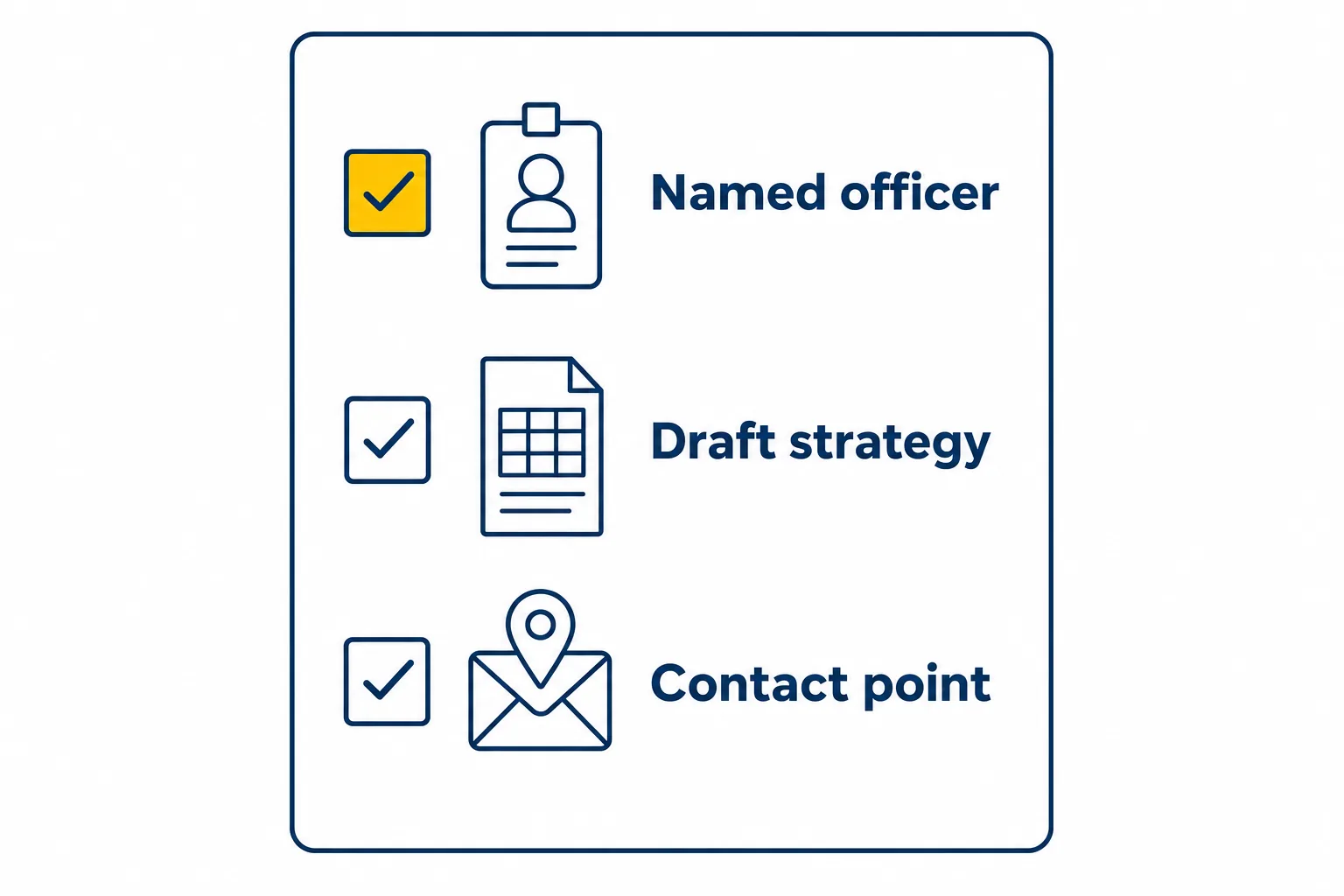
Before you sign, prepare three things: a named accountable officer, an accessibility strategy (even a rough one), and a real contact point for follow-up. The appropriate signatory and approval route depend on the city’s legal and governance structure. If local procedure permits, pair the commitment with a council or governing-body action that can provide continuity beyond one executive term.
Treat signing as a public direction-setting step. It should be followed by a plan for implementation and reporting, and it does not replace local law or remove the need for jurisdiction-specific legal and administrative review. Explain these boundaries in the briefing memo so departments understand what the commitment does and does not require.
Step 2: Baseline before you build, with a real accessibility audit
You cannot report progress against a number you never collected.
Scope the audit across sidewalks and crossings, transit stops and vehicles, public buildings, parks, emergency services, and municipal websites and apps. The Foundation’s accessibility resources and practical tools can support background research, but the audit method and standards should be selected for the city’s jurisdiction and assets.
Three rules make an audit worth the money:
- Choose a recognized accessibility or universal-design standard so results can be compared with future audits and, where appropriate, peer-city data.
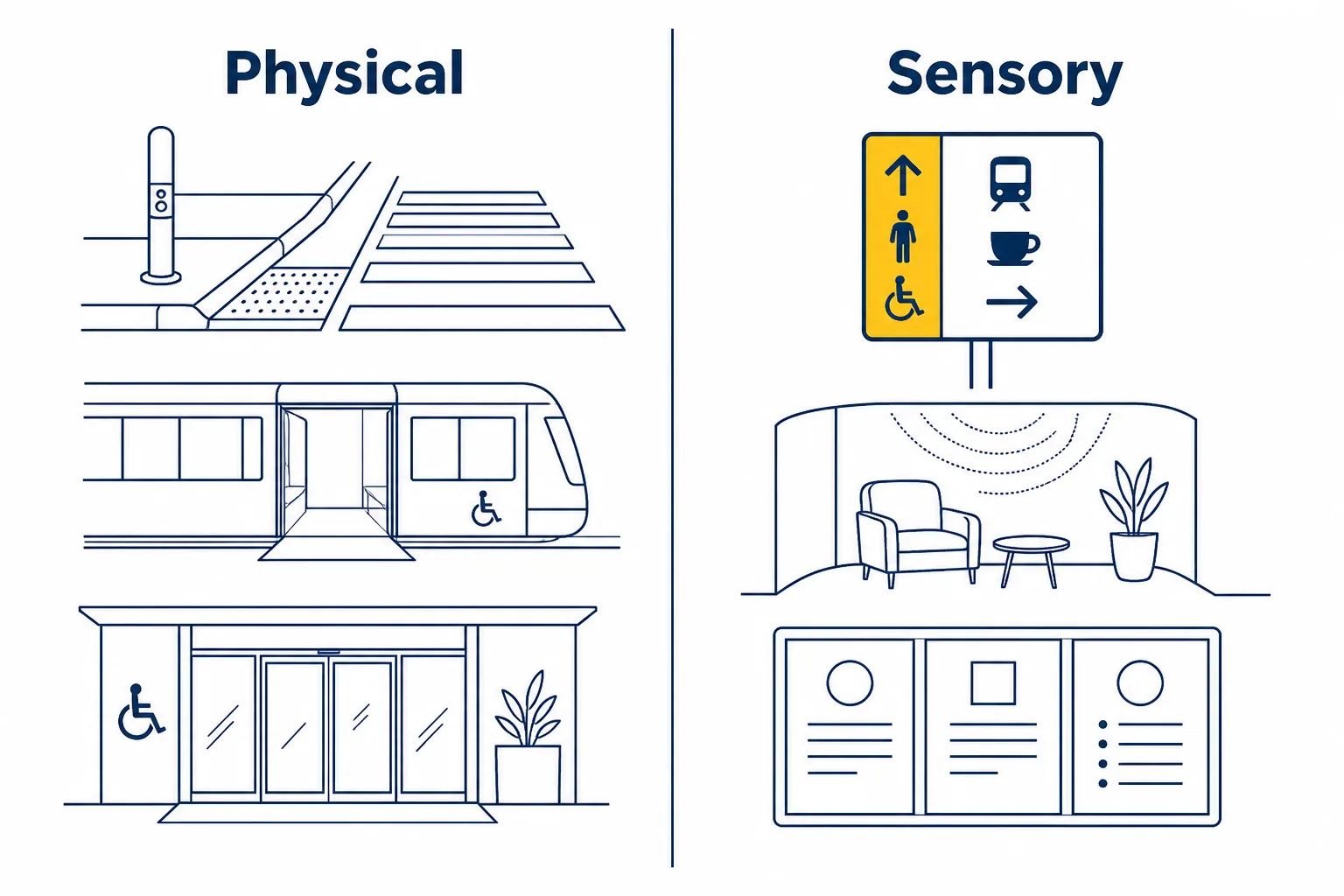
- Include sensory and cognitive access. Wayfinding, lighting, acoustics, quiet spaces, and plain-language signage should be considered alongside curb ramps.
- Budget for paid participation because unpaid consultation can limit who is able to contribute and can weaken the audit.
The useful output is a public or internally accountable baseline, a mapped barrier list, and a dated remediation backlog.
Step 3: Write universal design into codes, budgets, and procurement
How do you make cities more accessible? Work three layers at once.
Physical. Step-free routes on priority pedestrian networks, curb ramps, tactile paving, obstruction-free sidewalk clear width, accessible pedestrian signals at controlled crossings.
Transit. Low-floor buses, level boarding, audible and visual announcements, stations with redundant vertical access so one elevator outage does not strand riders.
Digital. Municipal sites and apps that conform to WCAG, with inclusive technology and digital access considered alongside real-time accessibility data in trip planners, accessible payment, and permitting flows.
Procurement is one practical way to make accessibility part of routine delivery. Add accessibility as a scored criterion in relevant RFPs and as a contract requirement where appropriate. A consistent evaluation template can help project teams apply the same expectations across procurements.
Addressing access during concept and design stages may reduce the need for later changes, but costs and legal requirements depend on the project and jurisdiction.
The Convention on the Rights of Persons with Disabilities, including Article 9 on accessibility, provides international rights-based context. It should not be treated as a substitute for local legal advice.
Step 4: Give Disabled Residents a Formal Role in City Decisions
Consultation asks people what they think about a finished design. Co-design gives disabled residents meaningful influence while the design can still change. That input can affect the quality and usability of the final result, but the decision-making role should be defined in advance.
Structures that hold up:
- A standing disability advisory body with its own budget and staff support.
- A defined opportunity to review capital projects at a design stage, with authority appropriate to local rules.
- Seats on transit, planning, and housing boards, not only on a committee that reports to nobody.
Engage organizations of persons with disabilities and individual residents, recruit across disability types and neighborhoods, and publish how their input affected decisions. Avoid token participation by defining the advisory body’s role and the points at which its feedback must be considered.
Step 5: Measure, report, and feed the global evidence base
Start with a small set of indicators you can collect consistently. Four examples are:
- Share of transit stops with step-free access
- Share of audited crossings meeting the standard
- Median resolution time for reported access barriers
- WCAG conformance across your ten highest-traffic digital services
Use the data for internal decisions, public reporting, and, where a city network or survey accepts it, contributions to comparative city initiatives. Consistent municipal data can make progress easier to compare and can inform future policy and funding conversations.
The UCLG policy paper on inclusive and accessible cities also emphasizes assessment, participation, benchmarking, monitoring, and reporting. Where useful, align local reporting with UN Sustainable Development Goal 11, including its focus on inclusive transport, participatory planning, and accessible public spaces.
Publish on a consistent schedule and explain delays, scope changes, or incomplete actions so readers can understand the status of the work.
Who Owns Accessibility Inside City Government?
Design standards and public pledges are useful, but implementation also depends on ownership, funding, maintenance, and feedback systems.
Name an accountable officer with cross-departmental authority. A coordinator needs a defined mandate and a way to convene public works, transit, IT, parks, and other relevant departments.
Identify funding routes early, including capital-improvement set-asides, maintenance budgets, national or development-bank grant programs, and private co-investment where appropriate and permitted.
Treat maintenance as part of accessibility delivery. Many day-to-day barriers can arise from operations as well as original design: a ramp blocked by scaffolding, an elevator out of service for weeks with no restoration standard, or roads plowed while crossings and bus stops stay buried. Set service levels for accessibility assets and publish performance against them.
Build one feedback channel with a response commitment. A single reporting route, triage process, and published response time can make follow-up easier to track.
What Cities Can Learn from Verified Peer Examples
Use published city lists to identify potential peers, not to declare a city “most accessible.”
Rankings use different methodologies and may measure the built environment, transit, digital services, employment, policy, or other factors.
The Cities For All campaign process described above names cities that have expressed interest in the initiative. That indicates campaign interest or participation; it is not proof of a city’s overall accessibility performance. Verify each city’s current status and cite its own plan, official evaluation, or published project record before presenting it as a case study.
For useful peer learning, compare a city with similar population, budget, climate, building stock, and governance capacity. Examine a specific asset or process, such as a transit retrofit, public-space audit, procurement rule, or feedback system, rather than relying on a general ranking.
A 12-month starting sequence
Adapt this to your budget cycle. It is a template, not a mandate.
- Months 1 to 2: Executive sign-off, express interest in the Global Compact, name the accountable officer.
- Months 3 to 5: Conduct a baseline audit of transit, the priority pedestrian network, and your top ten digital services.
- Months 6 to 8: Stand up the disability advisory body with budget and design sign-off authority. Rewrite procurement evaluation criteria.
- Months 9 to 12: Publish the baseline, adopt a costed multi-year plan, report your first indicators publicly.
A city with limited capacity can begin with one corridor, public building, service, digital product, or public-space project, then use the lessons to expand. The scope should match the city’s authority, budget, and data capacity.
Frequently asked questions
What Is the Global Compact on Inclusive and Accessible Cities?
What Are the Six Principles of the Global Compact?
How Can a City Join the Global Compact?
What Should a City Prepare Before Signing?
What Happens After a City Signs?
How Should Disabled Residents Participate in City Accessibility Planning?
How Should a City Measure Accessibility Progress?
Does Joining the Global Compact Replace Local Accessibility Law?
Start Where Your City Already Has Momentum
Rather than creating a separate program immediately, identify a system already under redesign, such as a corridor project, fleet purchase, or website rebuild, and use it as a defined pilot. Document the accessibility requirements, resident input, decisions, and remaining work.
Cities interested in participating should confirm the current campaign process. For implementation, training, or accessibility-planning support, contact the Foundation about a city inclusion partnership and review its inclusive city-planning frameworks and accessibility audits.